
Table of Contents
Digital Evidence
The provision of electronic evidence to the courts and in any competence is increasingly common. The wide variety of evidence presented in judicial processes has also increased. Video surveillance records, social networking comments, certified emails, instant messages such as WhatsApp, banking instructions, and screenshots. Mobiles are also important sources of electronic evidence. These are just examples of a broad list that does not stop increasing because new technological means are developed. As digital systems become more widespread, cybersecurity and everything you need to know becomes increasingly relevant to protecting the information that may later be used as evidence.
Evidence is considered digital when the information provided with probative value is included in an electronic medium or is transmitted by the said medium.
The legal world, to cope with the massive use of electronic and technological instruments, is complemented by legal research solutions that redesign the sector and require its professionals to continue training. At the same time, new opportunities appear to confront conflicts because of the increase in new digital media. Maintaining reliable information security practices is important to protect the confidentiality and integrity of electronic records.
Phases of the Digital Test
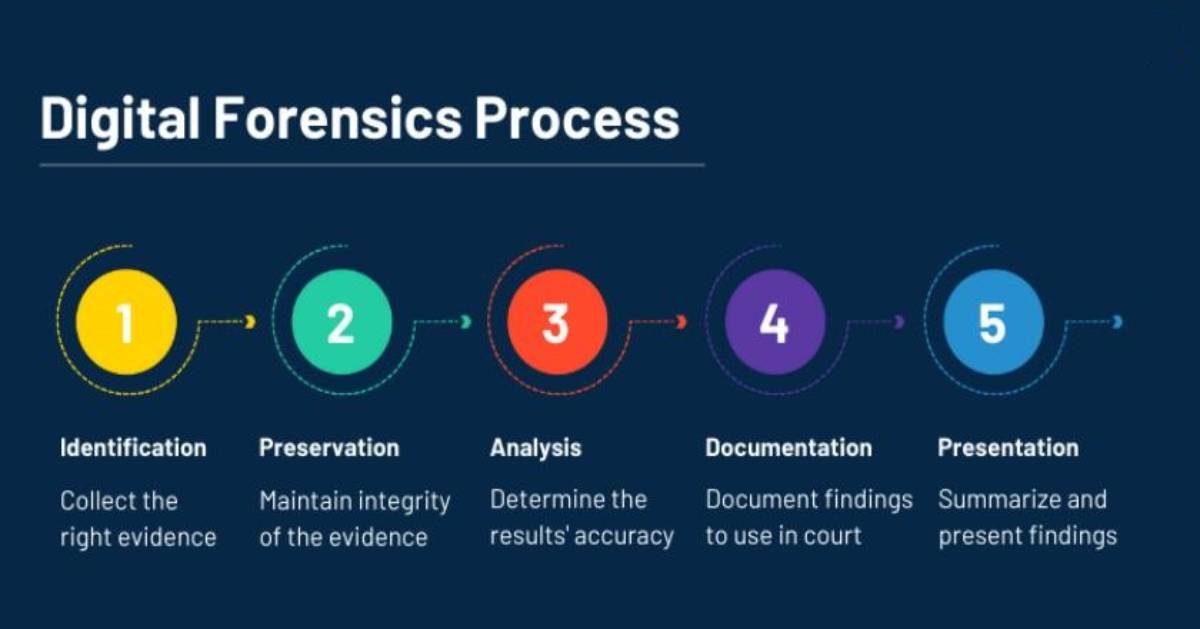
The different phases through which digital evidence is incorporated into a judicial procedure include:
Access by the parties to legally relevant information without affecting fundamental rights. This involves collecting information or facts for testing purposes, so it is a phase that happens before electronic evidence is introduced into the process.
- Compliance with the chain of custody of digital evidence. It is necessary to ensure that the evidence has not been manipulated during collection, analysis, and presentation.
- Incorporating data into the process. This must previously meet specific requirements: relevance, necessity, legality, and procedural admissibility. It consists of introducing legally obtained information into the judicial process; it must therefore be relevant to the accreditation of one of the controversial facts in the context of the dispute.
- Judicial evaluation. If the evidence meets the requirements mentioned above for obtaining, security, and incorporation, it will be subject to an assessment by the judge or court. This evaluation is carried out by the judicial body on the data provided by the party concerned to grant or refuse credibility according to the evaluation system established by law.
Electronic evidence can originate from computers, smartphones, network equipment, and other connected hardware. Understanding what counts as a device in cybersecurity helps clarify the different sources from which digital records may be collected.
Free Evaluation of the Digital Test
The legislation in force requires that the judge or the court examine the facts contained in demonstrated electronic evidence, except for so-called electronic public documents. Digital evidence will show its effects to illustrate the event under discussion, but the judge will grant its effectiveness according to the rules of sound criticism.
If suspicions arise about the authenticity or integrity of electronic evidence, the judge may refuse to accept its evidentiary value.
Among the requirements to ensure the validity of digital evidence and obtain it legally and in line with the applicable evidentiary rules, it is essential to prove its authenticity and integrity through a computer expert.
Applicable Regulation
The law of civil proceedings includes the regulation of expert evidence under the traditional rules of Book II, Chapter V. In addition, Section VIII of Chapter VI addresses the reproduction of words, sound, and images, as well as instruments that allow relevant data to be presented and discovered during a process. These provisions help address newer forms of evidence, even when the legislation was originally designed around traditional forms of proof.
Other applicable laws include Law 34/2002 on Information Society Services and Electronic Commerce and Law 6/2020, which regulates certain aspects of electronic trust services. Article 3 recognizes that public, administrative, and private electronic documents have the value and legal effectiveness corresponding to their respective nature under the applicable legislation. Therefore, it recognizes the validity of electronic support and admits electronic documents as documentary evidence when they meet the relevant legal requirements.