

Table of Contents
Web Design Experts: How Professional Web Design Helps Businesses Grow
Web design experts can help businesses achieve their goals by creating websites that communicate a brand’s message and meet users’ needs. Whether a business is local, industrial, or traditional, a well-designed website can strengthen its online presence and help it connect with potential customers.
Web design has become increasingly important because simply having a website is not enough. Businesses need an online platform that attracts visitors, provides useful information, and encourages users to take action.
To develop an effective website, businesses need expertise in several areas, including visual design, programming, conversion rate optimization (CRO), and search engine optimization (SEO).
Web design experts can help businesses make the most of their online platforms. Their services focus on usability, performance, and visual quality, helping create a better user experience and increasing the potential for conversions.
Website design involves the layout, appearance, and user experience of a website. It focuses on how visitors interact with pages, navigate content, and access information. Although desktop design was once the primary focus, mobile and tablet experiences have become increasingly important.
A well-structured web page should look appealing, work smoothly, and make it easy for visitors to find what they need across different devices.
Learn More About Web Design
One of the key ingredients of a successful digital product is an effective, efficient, and visually appealing interface. Creating high-quality displays, whether for websites or physical products such as remote controls, requires an understanding of human vision and visual perception.
By observing how people perceive shapes, colors, patterns, and layouts, designers can create interfaces that feel natural and easy to use.
Gestalt psychology is particularly relevant to web design because it explains how people perceive visual elements as organized groups and patterns. Designers can apply these principles to improve page structure, group related information, and guide visitors’ attention.
Understanding user behavior also helps designers make better decisions about navigation, content placement, and visual hierarchy.
Desktop Applications
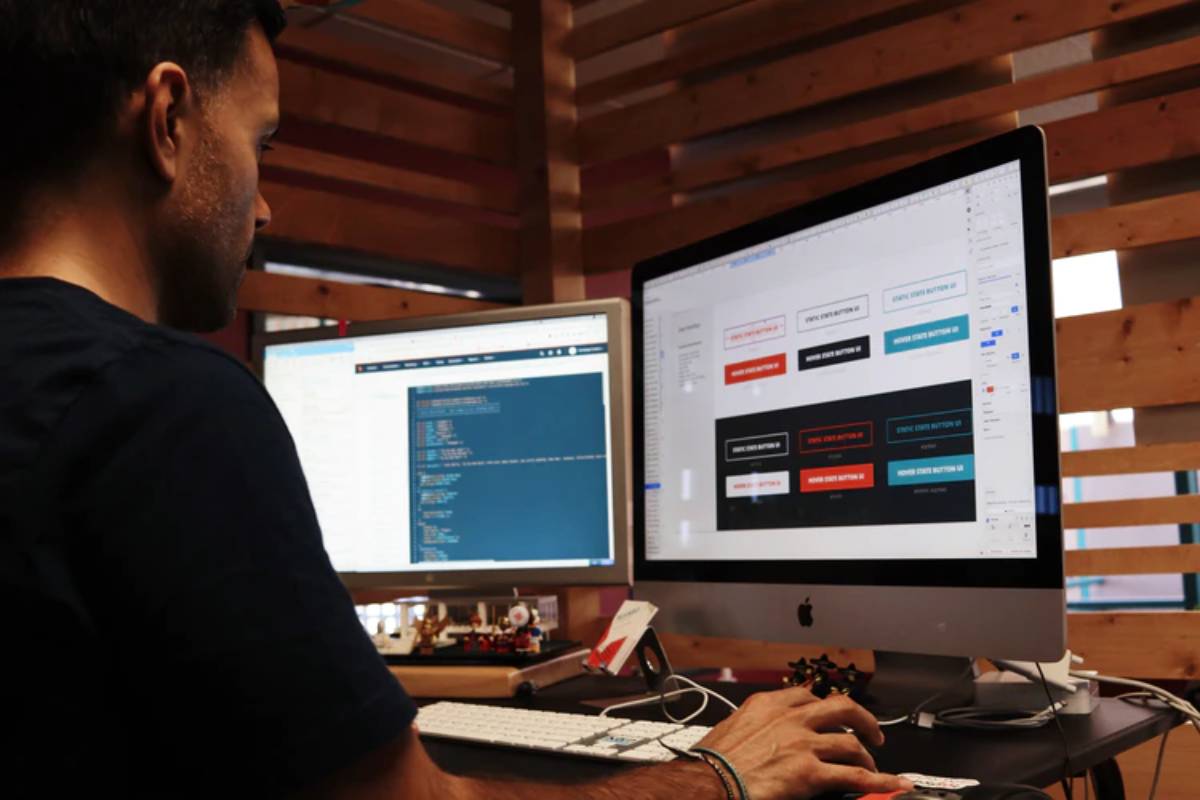
Desktop applications used for web design allow designers to create layouts and visual concepts before handing them over to developers for implementation. Popular design tools include Adobe Photoshop and Sketch.
This approach is common for large or complex websites because it allows designers to focus on the overall appearance while developers handle technical implementation.
However, a separate design and development process can be expensive and time-consuming. It may require multiple team members with different skill sets, as well as additional communication and revisions.
For simpler projects, website builders can reduce the need for extensive coding. Businesses should still consider whether the platform offers the flexibility, performance, and customization their website requires.
Website Builders
Many website builders offer tools and templates that help users create websites without extensive programming knowledge. Popular options include Wix, Webflow, and Squarespace.
Each platform differs in pricing, design flexibility, templates, integrations, and editing experience. Businesses should compare these features before selecting a platform.
It is helpful to research available options, try free trials when available, and determine which platform best fits the website’s goals.
The choice of website builder can also affect performance and search visibility. Selecting hosting that helps SEO can support a website’s speed, reliability, and accessibility, although hosting alone cannot guarantee better search rankings.
Web Design Elements
When designing a website, it is important to consider both functionality and appearance. These elements work together to improve usability, visitor engagement, and overall website performance.
Usability includes an easy-to-navigate interface, appropriate graphics and images, readable text, and a consistent color scheme. Visitors should be able to find important information without unnecessary effort.
Website performance includes loading speed, mobile responsiveness, accessibility, and the ability to help users complete their intended tasks. Search visibility also matters because it helps potential customers discover the website.
A well-designed website balances these elements rather than focusing on appearance alone. Regular testing and updates can help maintain a positive user experience as the website grows.
Visual Elements
Visual elements influence how visitors understand and interact with a website. Careful attention to layout, color, typography, images, and spacing can make pages more appealing and easier to navigate.
Here are some important visual elements to consider:
1. Layout
A clear layout organizes information into sections and helps visitors understand the page quickly. Consistent spacing and alignment make content easier to scan.
2. Color Scheme
Colors help establish brand identity and create visual consistency. Choose colors that complement one another and provide sufficient contrast between text and backgrounds.
3. Typography
Readable fonts, suitable font sizes, and clear heading styles make content easier to understand. Consistent typography also helps establish a recognizable visual style.
4. Images and Graphics
High-quality images and relevant graphics can explain ideas, support the content, and make pages more engaging. Optimize image sizes to avoid unnecessarily slowing down the website.
5. Navigation
Menus, links, and buttons should be easy to locate and use. Clear navigation helps visitors move between pages and find relevant information.
6. Mobile Responsiveness
A website should adapt to different screen sizes, including smartphones, tablets, and desktop computers. Testing across devices helps identify layout problems and usability issues.
For businesses with complex websites, enterprise mobile website testing can help evaluate how the website performs across mobile devices, browsers, and operating environments.
7. Loading Speed and Performance
Fast-loading pages help reduce friction for visitors. Optimized images, efficient code, reliable hosting, and regular performance checks can contribute to a smoother browsing experience.
By combining these visual and technical elements, web design experts can create websites that look professional, function reliably, and support business objectives.