
Table of Contents
Important Features of Laravel Every Developer Should Know
You may be reading this article because you want to hire Laravel developers, already know PHP and want to learn more about Laravel, or are simply curious about the programming world. Whatever your reason, keep reading!
The Laravel framework was developed to make building PHP-based applications easier. As an MVC framework, it simplifies many aspects of development, such as organizing classes and methods that can be reused throughout an application. This reduces repetitive work and makes code easier to maintain.
The future of Laravel is promising, and knowing how to use it can provide professional advantages. If you’re new to Laravel, start by understanding its most important features and how they support modern software development.
Laravel Is Modular and Extensible
One of Laravel’s key advantages is its modular and extensible structure, which helps developers organize application code and manage dependencies.
Modularity encourages developers to separate files and components in a logical structure. Extensibility allows them to add packages and libraries to expand an application’s functionality.
This organized approach also makes it easier to understand software architecture. Learning about software design levels can help developers understand how different parts of an application fit together.
Cache System
Laravel includes a flexible caching system that can improve application performance. Caching stores frequently used data temporarily, reducing the need to repeat expensive operations.
By reducing unnecessary database queries and processing, caching can help applications load faster and handle more requests efficiently.
Developers can configure caching according to the application’s requirements and use suitable cache drivers for their projects.
Users
Laravel provides authentication features that help developers manage user access. Depending on the authentication setup, applications can support login, logout, password recovery, and remember-me functionality.
Developers can also manage sessions and store relevant information about users during their interactions with an application.
These features make it easier to build applications that require user accounts while maintaining a structured approach to access management.
Routing System
Laravel uses a flexible routing system to connect incoming requests to the appropriate parts of an application. Routes define how the application responds to URLs and HTTP methods.
Laravel also includes a dedicated routes directory where application routes are organized. This makes them easier to locate, manage, and maintain.
Clear routing structures help developers understand how requests move through an application. They can also simplify debugging when a particular URL or request does not behave as expected.
Laravel Template System
Laravel uses Blade as its templating engine. Blade allows developers to create dynamic pages using a clean and readable syntax.
It supports reusable layouts, template inheritance, and convenient ways to display data in views. This helps developers build attractive and functional interfaces without creating a separate template system from scratch.
Blade also works well with Laravel’s MVC architecture, helping keep presentation logic organized.
Artisan
Artisan is Laravel’s command-line interface (CLI). It provides commands that help developers perform common development tasks more efficiently.
Using Artisan, developers can generate application components, run database migrations, clear caches, and execute other framework-related operations.
Artisan can also support scheduled tasks through Laravel’s task scheduling features. Automating routine operations saves time and reduces repetitive manual work.
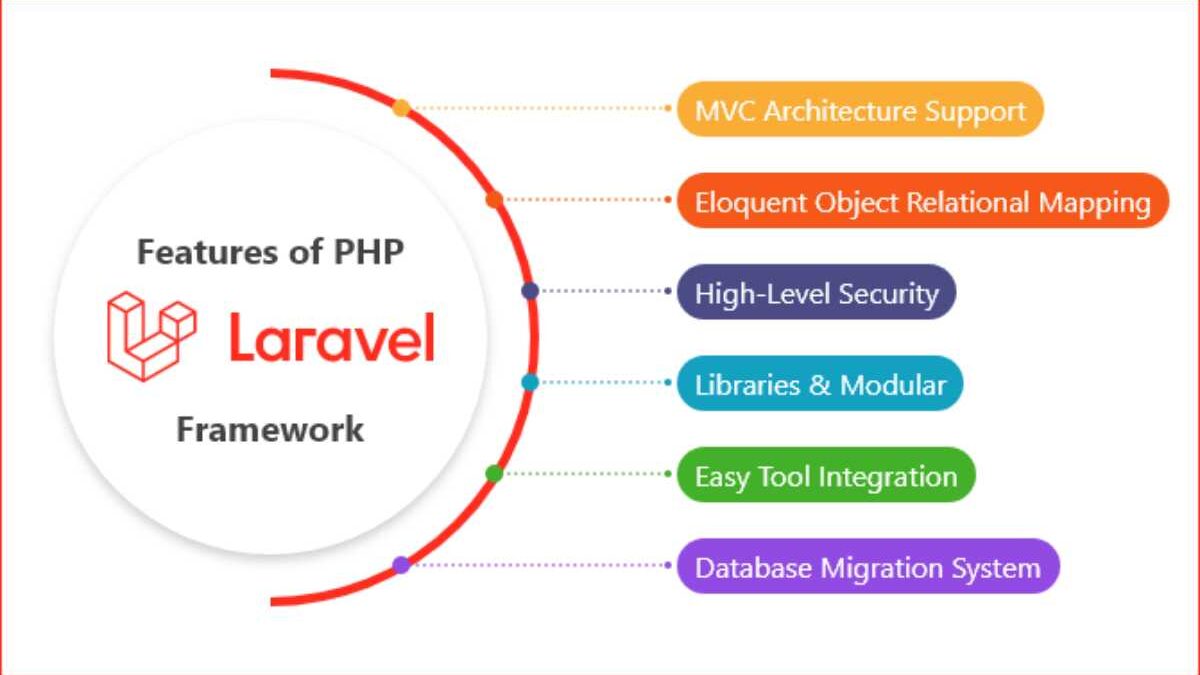
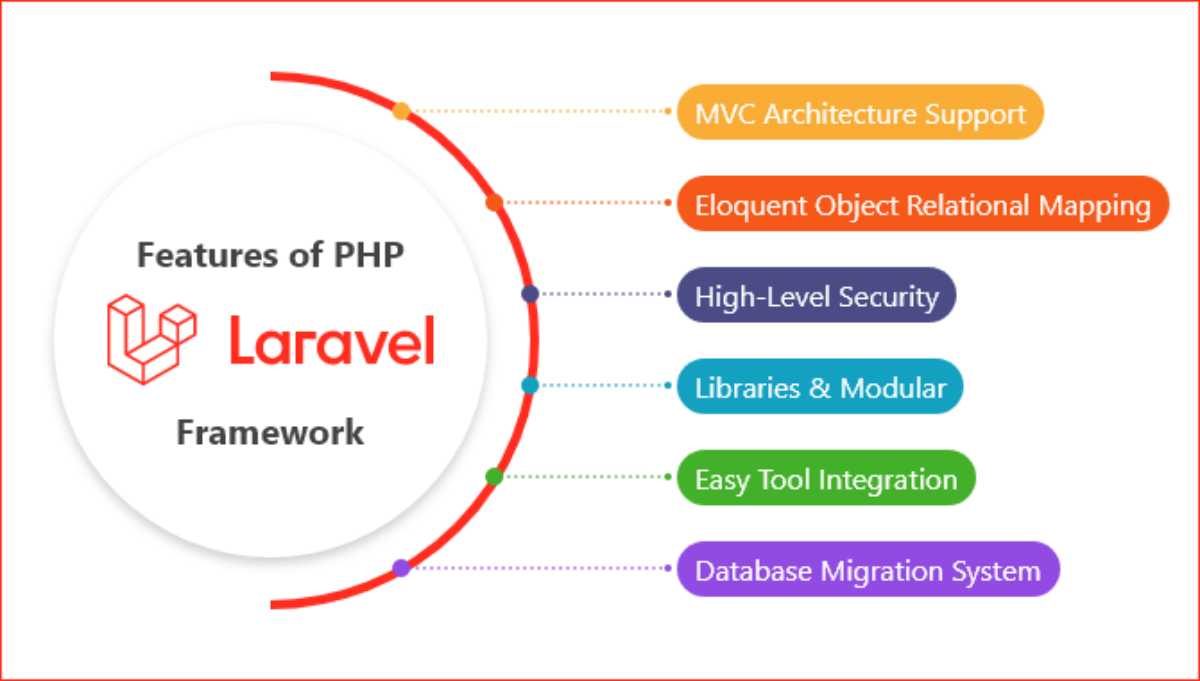
Eloquent ORM
Eloquent ORM is Laravel’s object-relational mapping system. It allows developers to interact with database records using PHP models rather than writing raw SQL queries for every operation.
Eloquent supports relationships between models, making it easier to retrieve and manage related data. Its expressive syntax can simplify common database tasks and improve code readability.
If you want to hire a Laravel developer, make sure they understand Eloquent and know how to use it effectively. The same applies if you want to become a skilled Laravel developer.
Developers should also know how to troubleshoot database queries and application errors. Practical experience with debugging a codebase with 10,000 lines highlights the importance of systematic problem-solving, readable code, and suitable debugging tools.
Laravel Migrations
Laravel migrations allow developers to create and modify database structures using PHP code. They can define tables, columns, indexes, and other database elements.
Migrations also help teams track database changes over time. Instead of manually making the same changes in different environments, developers can run migration files to keep database structures consistent.
They can create new tables, modify existing ones, and reverse certain changes when necessary. However, migrations should be tested carefully before being applied to production databases.
Database migrations are particularly useful when several developers collaborate on the same project or when an application moves between development, testing, and production environments.
MVC Architecture
Laravel follows the Model-View-Controller (MVC) architectural pattern. This approach separates application responsibilities to make code easier to organize, develop, and maintain.
In Laravel, Eloquent helps developers work with Models, while Blade is commonly used to create Views. Controllers coordinate requests and connect application logic with the appropriate data and responses.
The MVC architecture works as follows:
- The user interacts with the application’s user interface.
- The user’s action generates a request that is handled by the appropriate route and controller.
- The controller processes the request and may interact with a Model to retrieve or update data.
- The application passes the necessary data to the View, which generates the interface or response.
- The user receives the response and can interact with the application again.
This structure separates responsibilities and makes it easier for developers to maintain and extend an application.
Cybersecurity
Security is an important consideration when developing web applications. Laravel provides features that help developers protect applications against common security risks.
These include password hashing, protection against cross-site request forgery (CSRF), input validation, and tools for managing authentication and authorization.
Laravel’s CSRF protection uses tokens to help verify that submitted requests originate from the expected application context. Developers should also follow secure coding practices, manage dependencies, validate user input, and protect sensitive information.
Security requires ongoing attention throughout the software development lifecycle. Teams can use DevOps practices to integrate testing, deployment checks, monitoring, and collaboration into their development workflows.
The Bottom Line
Laravel is an excellent option for building web applications efficiently while still supporting complex functionality.
Its user-friendly syntax, flexible architecture, built-in tools, and active community make it a popular choice for developers who are learning PHP frameworks or building professional applications.
However, understanding Laravel’s features alone is not enough to become a skilled developer. Consistent practice, hands-on projects, debugging experience, and a willingness to keep learning are essential for long-term growth.